
Choosing the Right Business Structure to Save on Taxes
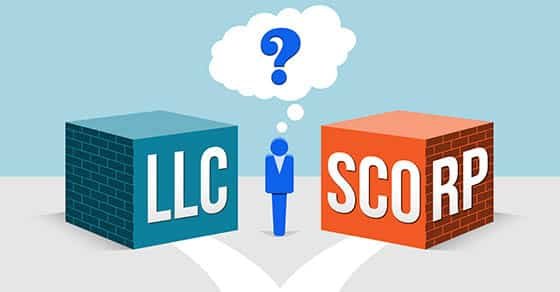
One of the most important decisions a business owner makes is choosing between an LLC (Limited Liability Company) and an S-Corp (S Corporation).
Both structures offer legal protection and tax advantages, but they are taxed differently. The right choice depends on your income level, business goals, and tax-saving strategies.
This guide will break down the tax benefits, key differences, and pros & cons of an LLC vs. S-Corp to help you make the best decision for maximizing tax savings.
1. What’s the Difference Between an LLC and an S-Corp?
| Feature | LLC (Limited Liability Company) | S-Corp (S Corporation) |
|---|---|---|
| Ownership | Can be one or multiple owners | Limited to 100 shareholders |
| Self-Employment Tax | Owners pay full 15.3% self-employment tax | Only salaries pay self-employment tax, distributions are tax-free |
| Tax Filing | Pass-through taxation (default) | Pass-through taxation (but must file Form 1120-S) |
| Payroll Requirement | No payroll requirement | Must pay a “reasonable salary” to owners |
| Tax Forms | File Schedule C (Form 1040) | File Form 1120-S + W-2 for salary |
| Best For | Small businesses, freelancers, real estate investors | Growing businesses, high-income freelancers |
💡 Tip: An LLC is easier to manage, but an S-Corp can provide tax savings if your profits are high enough.
2. How Is an LLC Taxed?
📌 By default, an LLC is taxed as a pass-through entity, meaning business income passes to the owner’s personal tax return.
✔ Single-Member LLC – Income is taxed as self-employment income on Schedule C.
✔ Multi-Member LLC – Profits are split among owners and reported on Form 1065.
🚨 The downside? All LLC income is subject to 15.3% self-employment tax (Social Security & Medicare).
💡 Tip: If your profits exceed $50,000 annually, electing S-Corp status may save you money on self-employment taxes.
3. How Is an S-Corp Taxed?
📌 An S-Corp also has pass-through taxation, but with one major tax advantage:
✔ Owners pay themselves a salary and pay self-employment tax only on that salary.
✔ Any additional profits (distributions) are NOT subject to self-employment tax.
Example: S-Corp Tax Savings
| Scenario | LLC (Self-Employed Tax) | S-Corp (Salary + Distributions) |
|---|---|---|
| Net Profit | $100,000 | $100,000 |
| Owner Salary | N/A (All income taxed) | $60,000 (salary) + $40,000 (distributions) |
| Self-Employment Tax | 15.3% on $100,000 = $15,300 | 15.3% on $60,000 = $9,180 |
| Savings | $0 | $6,120 |
💡 Tip: By structuring as an S-Corp, the owner in this example saves over $6,000 in taxes.
4. When Should You Switch from an LLC to an S-Corp?
If your business profit is over $50,000, switching to an S-Corp can save thousands in self-employment taxes.
📌 Consider switching to an S-Corp if:
✔ Your net profit exceeds $50,000 per year.
✔ You can afford to run payroll and pay yourself a salary.
✔ You want to lower self-employment taxes and take tax-free distributions.
🚨 Don’t switch if:
❌ Your business is new or not profitable yet.
❌ You don’t want extra paperwork & payroll requirements.
❌ You prefer simplicity over tax savings.
💡 Tip: You can elect S-Corp status while keeping your LLC—just file Form 2553 with the IRS.
5. Pros & Cons of an LLC vs. S-Corp
✅ Pros of an LLC
✔ Easier to manage (no payroll required).
✔ Flexible ownership structure.
✔ Less IRS scrutiny.
🚨 Cons of an LLC
❌ Higher self-employment taxes.
❌ Not as tax-efficient as an S-Corp for higher incomes.
✅ Pros of an S-Corp
✔ Biggest tax advantage: Lower self-employment taxes.
✔ Profits (distributions) are tax-free beyond salary.
✔ Potential for bigger long-term savings.
🚨 Cons of an S-Corp
❌ More administrative work (must run payroll & file Form 1120-S).
❌ IRS requires a “reasonable salary” (can’t pay yourself too little).
❌ More complex bookkeeping.
💡 Tip: If you don’t mind extra paperwork, an S-Corp saves thousands in taxes as income grows.
6. How to Elect S-Corp Status for Your LLC
✅ Step 1: Form an LLC (if you don’t have one).
✅ Step 2: File IRS Form 2553 to elect S-Corp taxation by March 15 (for current tax year).
✅ Step 3: Set up payroll & start paying yourself a reasonable salary.
✅ Step 4: File Form 1120-S each year for S-Corp tax reporting.
💡 Tip: Many LLC owners wait too long to switch to an S-Corp—consider making the change as soon as your profits justify it.
7. LLC vs. S-Corp: Which One Is Best for You?
Choose an LLC If:
✔ You’re a small business or freelancer earning under $50,000/year.
✔ You want simplicity & low paperwork.
✔ You’re not ready to run payroll or deal with S-Corp rules.
Choose an S-Corp If:
✔ Your net profit exceeds $50,000/year.
✔ You want to reduce self-employment taxes.
✔ You can pay yourself a salary & manage payroll requirements.
💡 Tip: You can start as an LLC and elect S-Corp status later when your income grows.
Maximize Tax Savings with the Right Business Structure
Choosing between an LLC and an S-Corp is one of the most important tax-saving decisions for business owners.
📌 For simplicity: Stick with an LLC.
📌 For tax savings: Consider an S-Corp if your net income is $50,000+.
📌 Need help deciding? Contact First Union Tax for expert advice on LLC vs. S-Corp taxation, payroll setup, and tax savings strategies!
LLCvsSCorp #BusinessTaxes #TaxSavings #SmallBusinessTaxes #SelfEmployedTaxes #FirstUnionTax #LLCvSCorpComparison #EntrepreneurTaxes #SoleProprietor